Designing the first in-car commerce platform
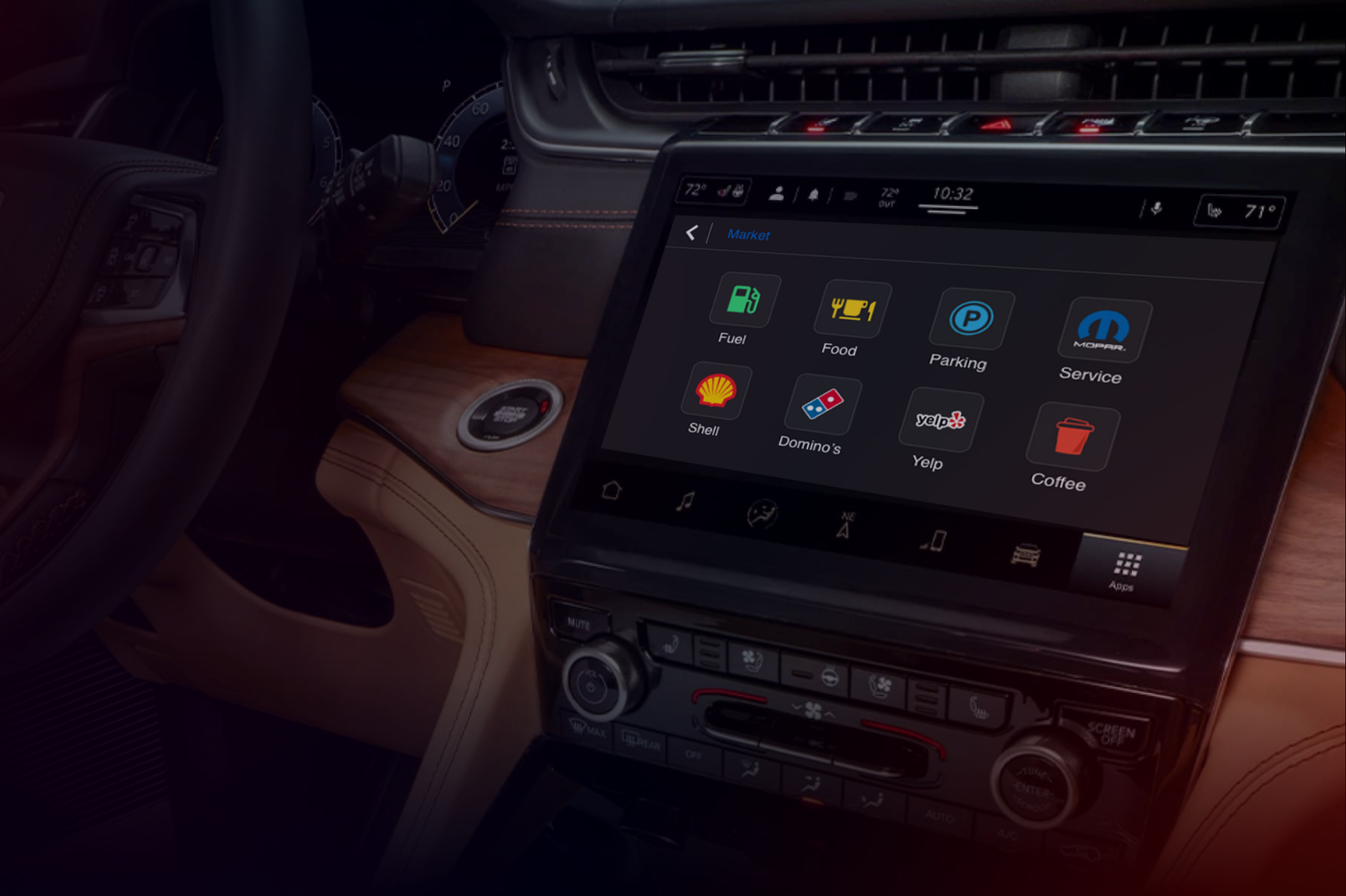
I helped launch Xevo Market, the first in-car e-commerce platform rolled out in over 10+ million vehicles. The solution was featured at CES and received several innovation awards.
01
My Role
Led the design of the Xevo Market platform for Stellantis and contributed to the GM implementation, collaborating within a five-member design team.
External Collaboration
Partnered with companies such as Panera and PayByPhone to translate their services into seamless in-car experiences.
Internal Collaboration
Worked closely with our engineering team to develop, refine, and integrate merchant app designs into the Xevo Market platform.
02
Design
Paying for food, gas, and parking is a routine part of every commute. I designed an intuitive in-car platform that allows drivers to complete these transactions seamlessly through their vehicle’s infotainment system.
Pay for fuel
Pay through the car and limit credit card fraud.
Order Coffee
Skip the line, and order ahead within five taps.
Curbside pickup
Auto-notify that your vehicle has arrived at the curbside pickup zone.
Paying for Parking
Avoid the rain and pay from the comfort of your car.
03
The Problem
Xevo Market was initially driven by innovation to integrate e-commerce into passenger vehicles. The product eventually evolved through user testing to address real-world issues.
Distracted Driving
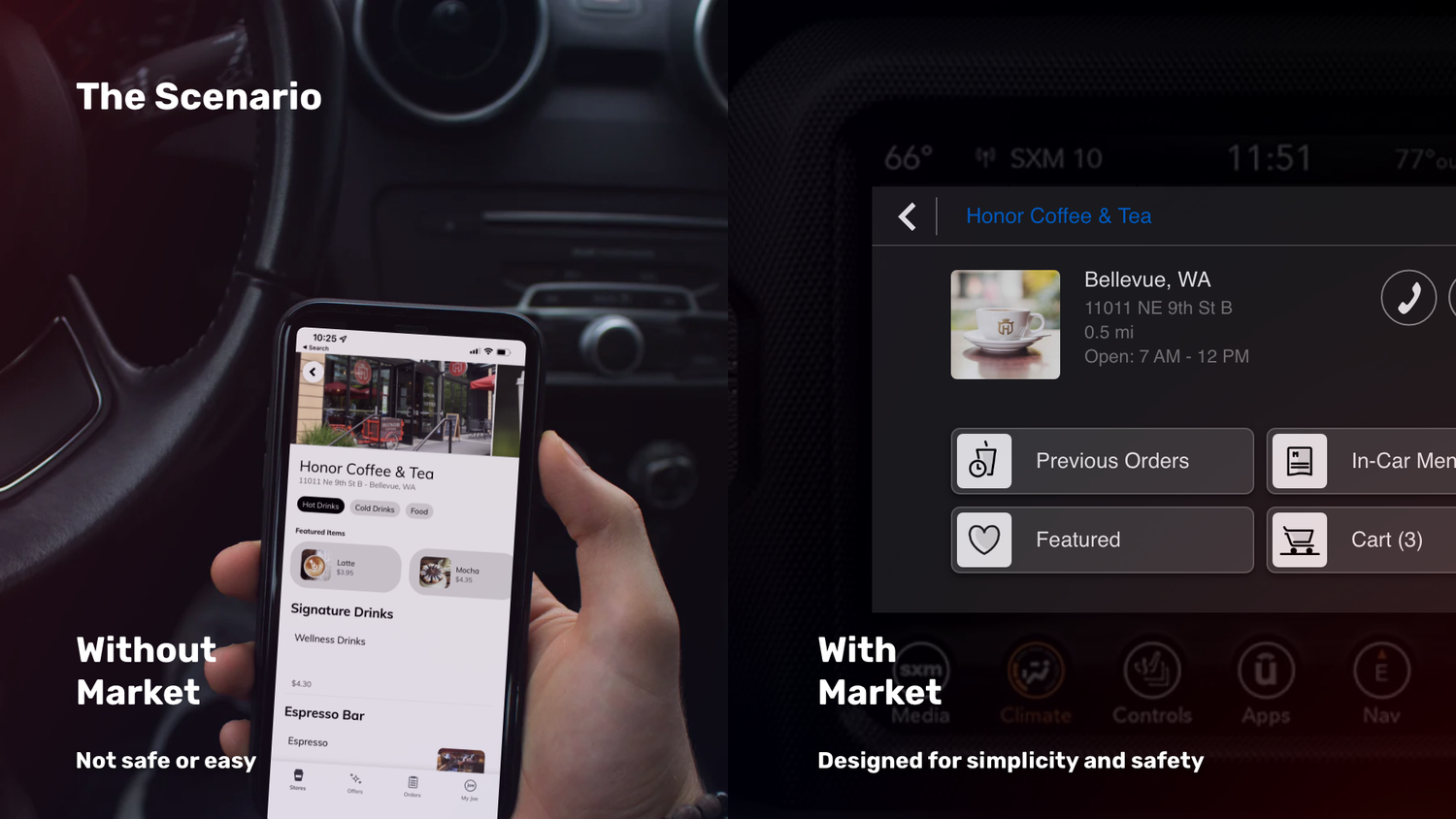
Phone usage is a major cause of distracted driving. Xevo Market helps perform routine tasks safely via the vehicle's larger touchscreen.
Fraud
Credit card readers can expose users to fraud. Xevo Market enables easier and contactless payments.
Waiting in line
No one likes waiting in line for food or groceries. Xevo Market uses GPS, in-vehicle notifications, and machine learning to help commuters save time by ordering ahead and checking in.
Safe and Intuitive Interface
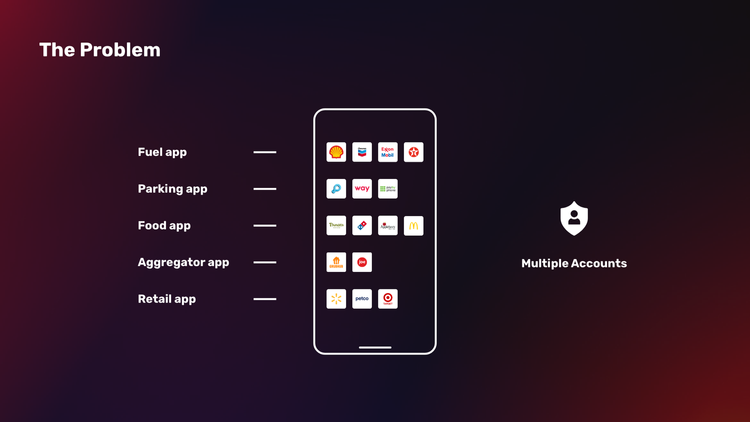
Most drivers juggle multiple apps for food, parking, and retail—each requiring separate logins, payment methods, and unfamiliar interfaces. Using them while on the road can be inconvenient and distracting.
Seamless Integration
Xevo Market introduced a unified account profile and digital wallet that allows drivers to pay any participating merchant directly from their vehicle. We accomplished this by aligning merchants around a shared vision for a seamless in-car experience and enabling secure guest transactions across brands.
04
My Approach
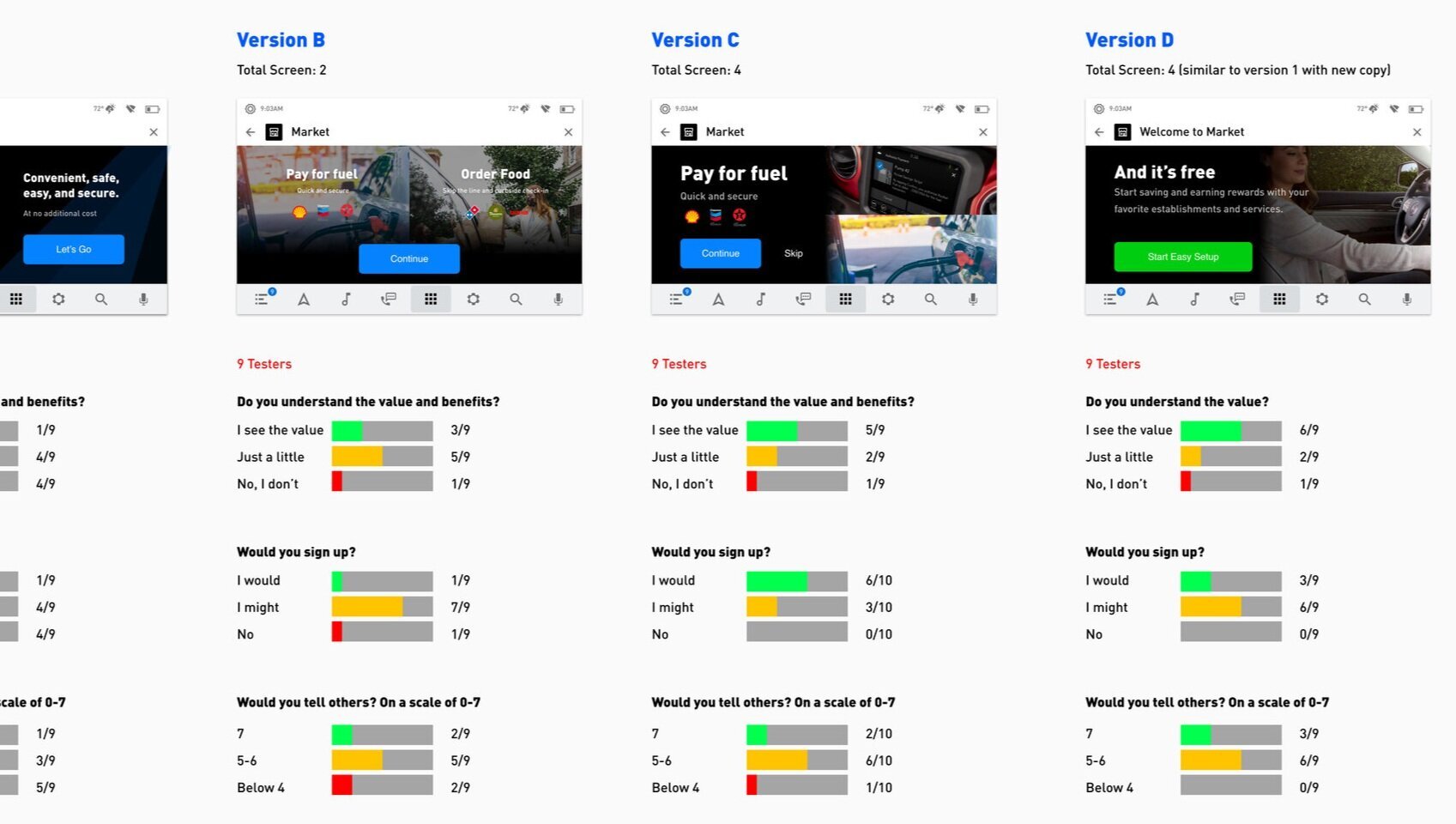
User research revealed that working professionals and millennials show a higher intent to use Market after recognizing the product’s value and convenience.
User Research & Usability Testing
I led more than 20 user and usability testing sessions to refine the in-car experience. Using UserTesting.com, I recruited vehicle owners to uncover driver pain points, evaluate their understanding of product features, and assess the intuitiveness of our interface and task flows.
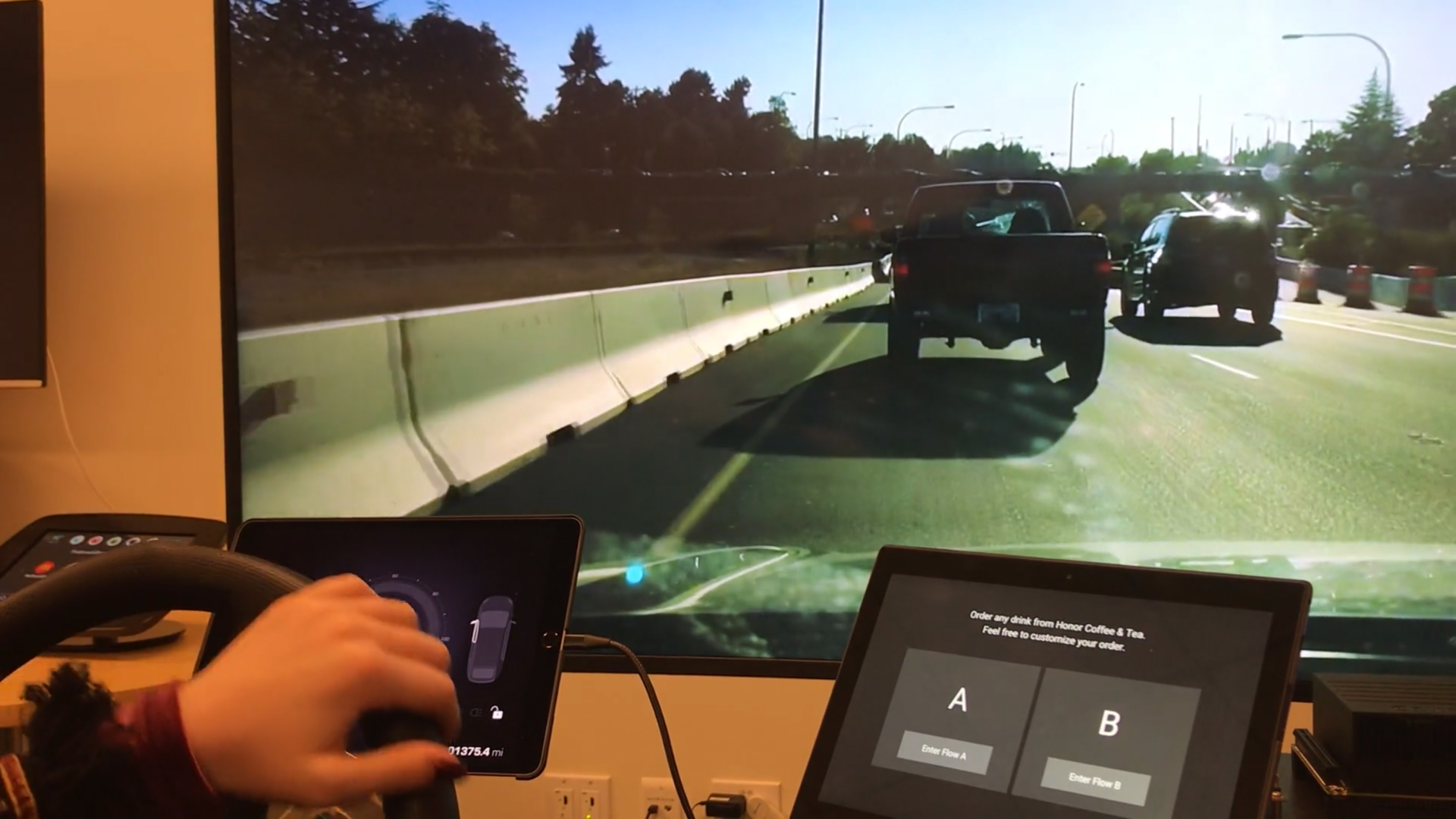
In-Vehicle Usability Lab
I established a dedicated lab for live, moderated usability studies. I recruited participants to engage with my in-car prototypes using a driving simulator, allowing us to observe real-time interactions in a controlled environment. These studies helped evaluate the usability of specific design solutions and measure levels of driver distraction.
05
Design System
I conducted comprehensive audits of infotainment systems, either using OEM provided test benches or leasing actual vehicles from dealerships, to understand platform constraints and interaction patterns. Based on these findings, I developed master templates composed of reusable, modular components that maintained design consistency and flexibility when data was incomplete or unavailable.
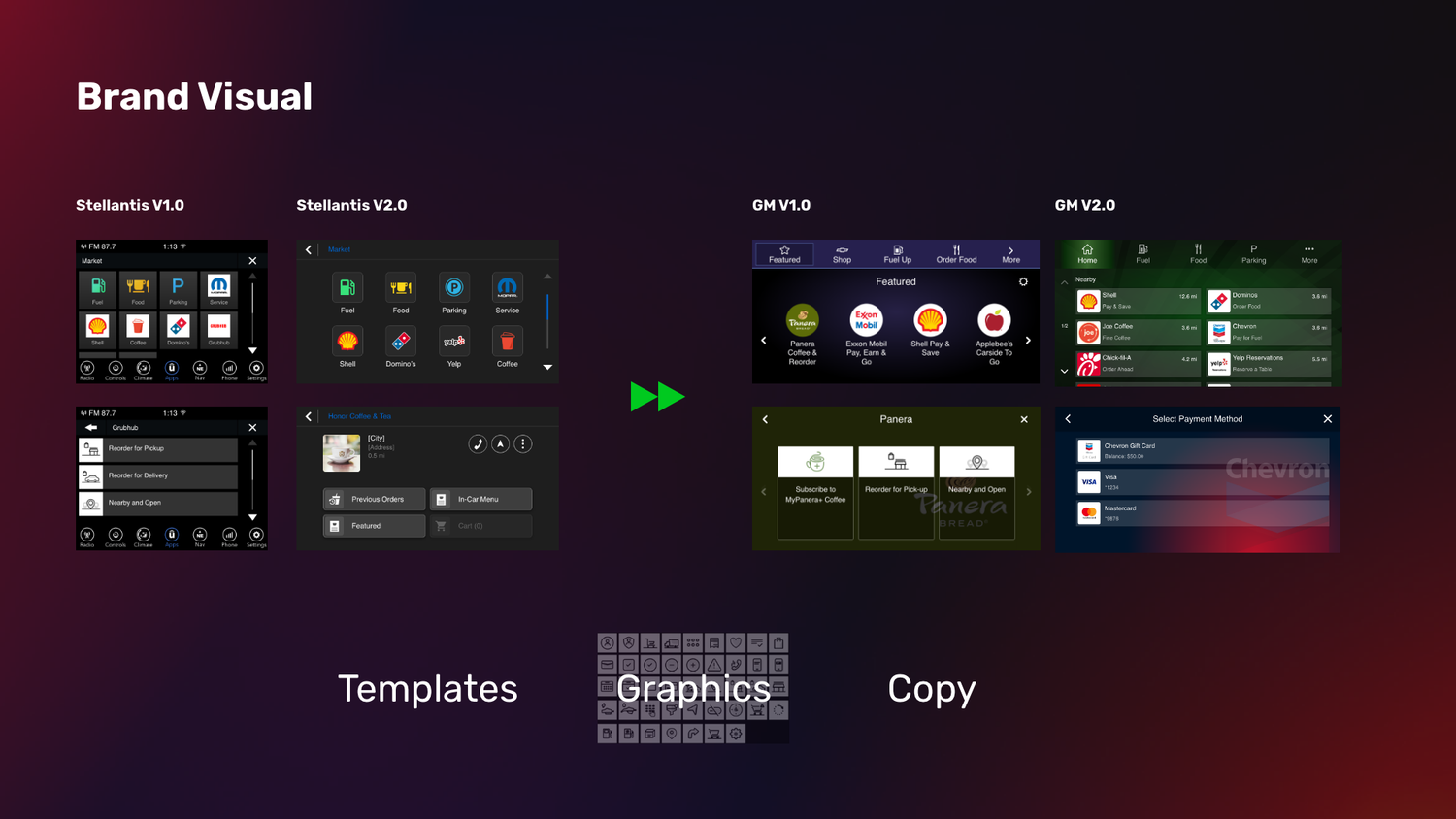
Aligning with Brand Style Guides
Each vehicle brand and model features a distinct infotainment interface and user experience. To ensure seamless integration with every system, I tailored our designs to align with the brand’s style guide. When a partner did not provide one, I created a custom style guide to maintain visual consistency and design coherence across all touchpoints.
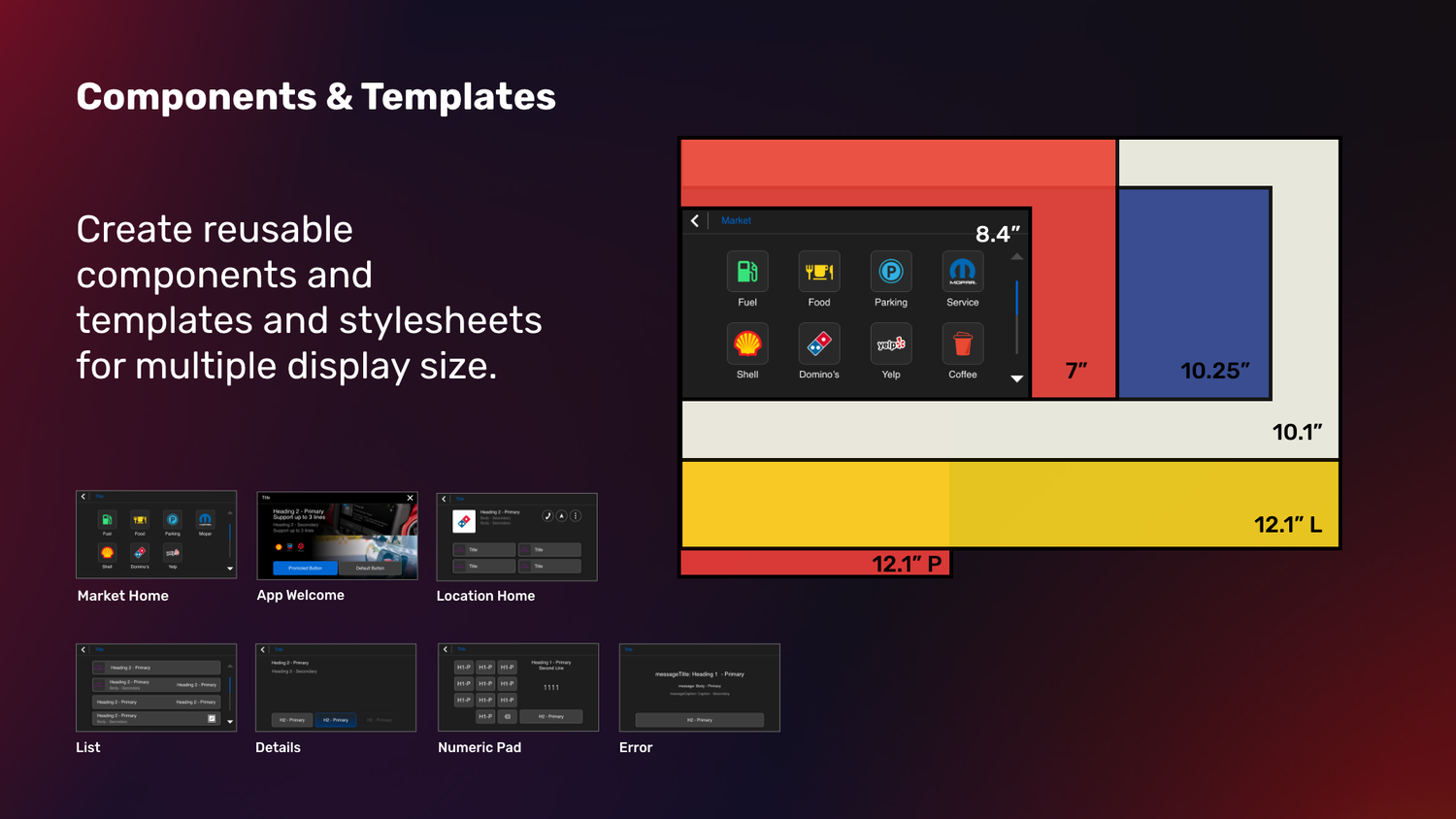
Crafting Flexible, User-Friendly, and Responsive Designs
Each new template undergoes rigorous usability testing to ensure it remains intuitive, accessible, and safe for drivers to use on the road.
06
Challenges
Designing a consistent in-car commerce experience was challenging because merchant offerings and APIs varied widely across food, parking, and retail services. At the same time, every interaction had to comply with strict NHTSA driver distraction guidelines, ensuring tasks could be completed safely and efficiently while driving.
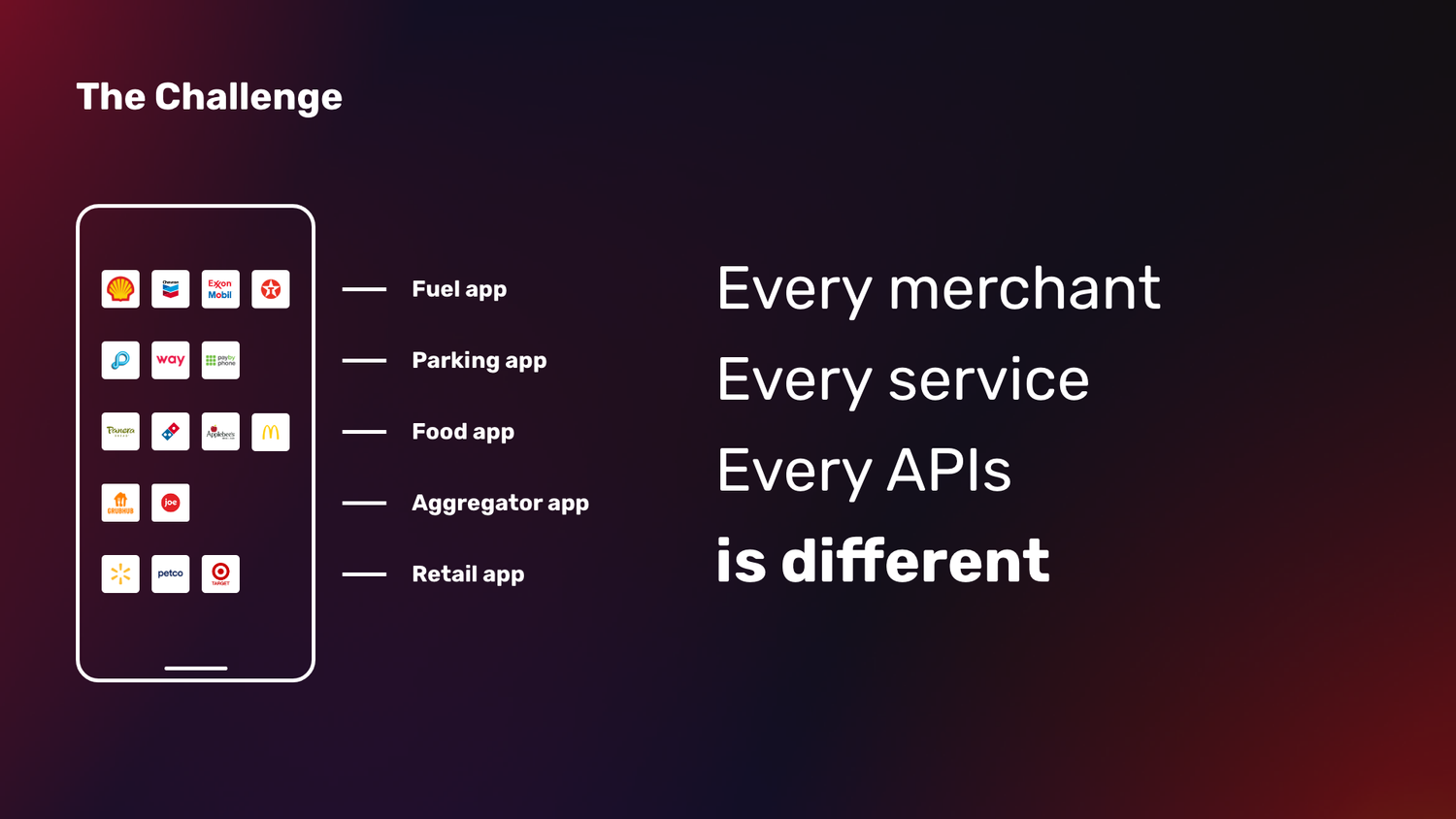
Varying Offerings and APIs
Streamlining certain task flows, such as paying for fuel, was relatively straightforward. However, food, parking, retail, and service merchants offered vastly different products and API capabilities, making it difficult to design a unified and standardized user workflow.
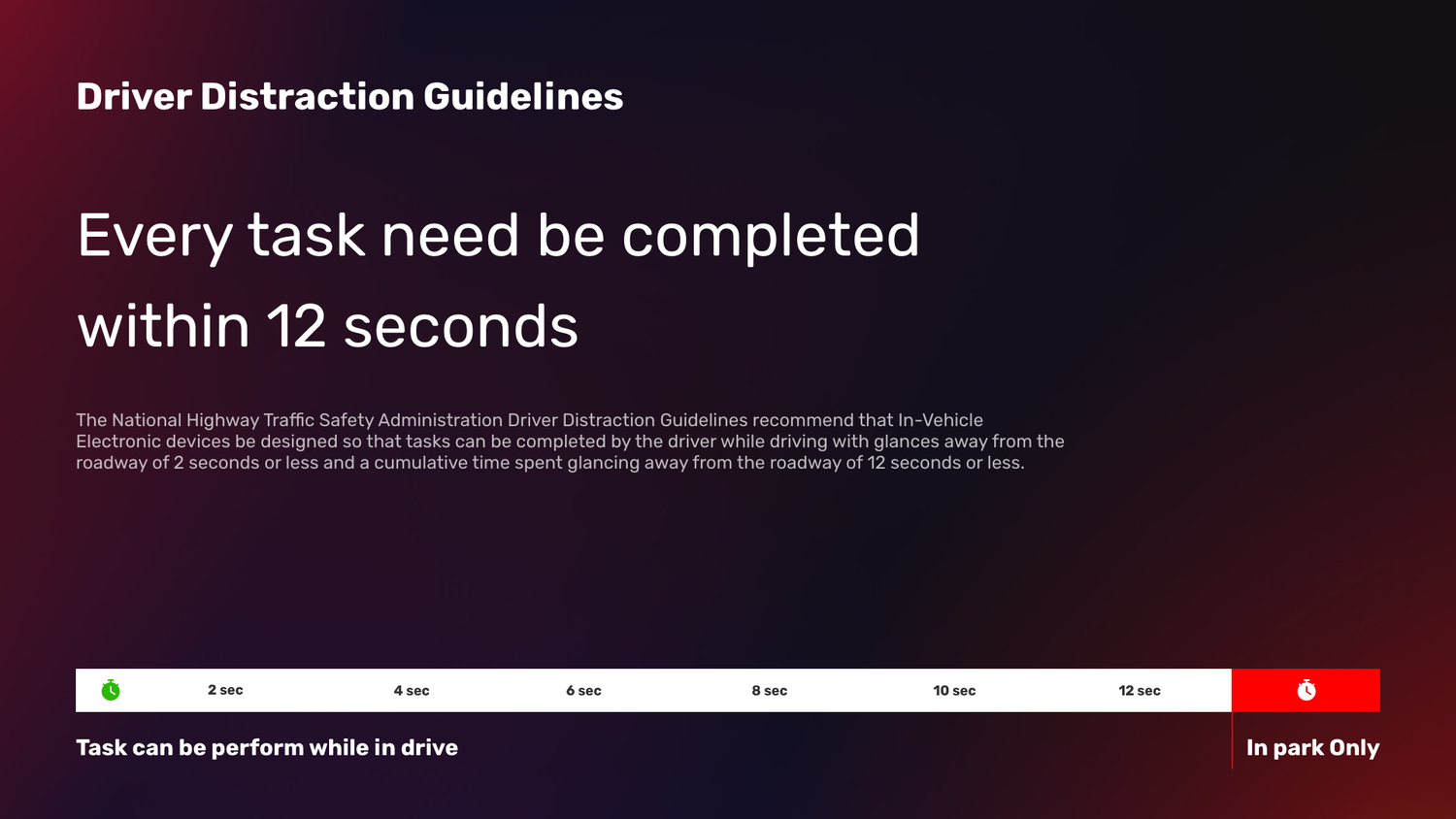
Driver Distraction Guidelines
Every task flow had to meet NHTSA driver distraction guidelines. Interactions permitted while the vehicle was in motion needed to be completed within 12 seconds, with a total of 22 seconds allowed when accounting for the driver’s glance time back to the road. Depending on the
06
Solutions
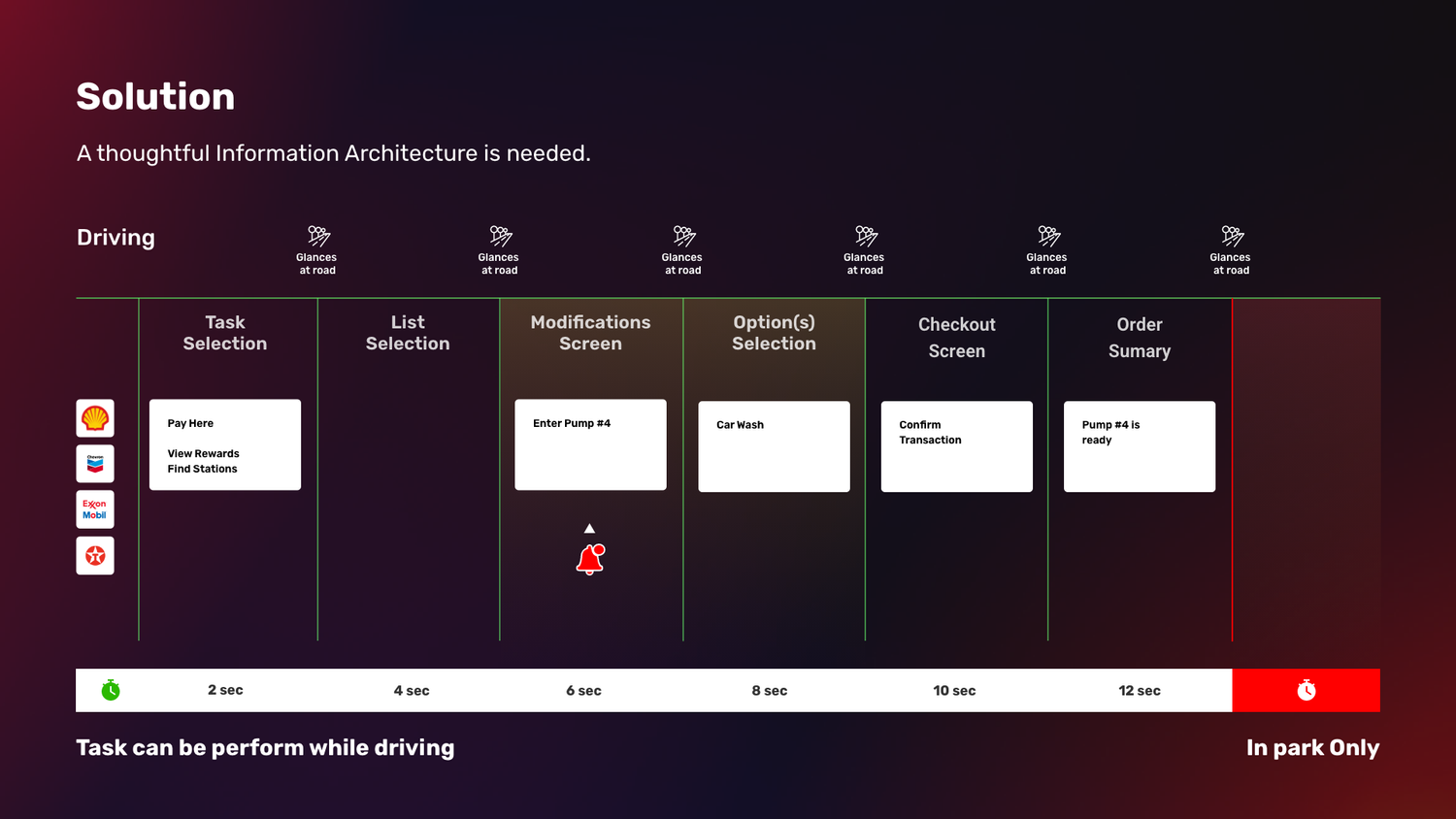
A Framework That Works Interchangeably
The diagram above shows the flow for paying for fuel. Regardless of which merchant the user selects, the options and flow remain consistent. Optional selections always follow the same screen structure. The framework also applies the Serial Position Effect, keeping the first and last screens consistent to build familiarity and predictability.
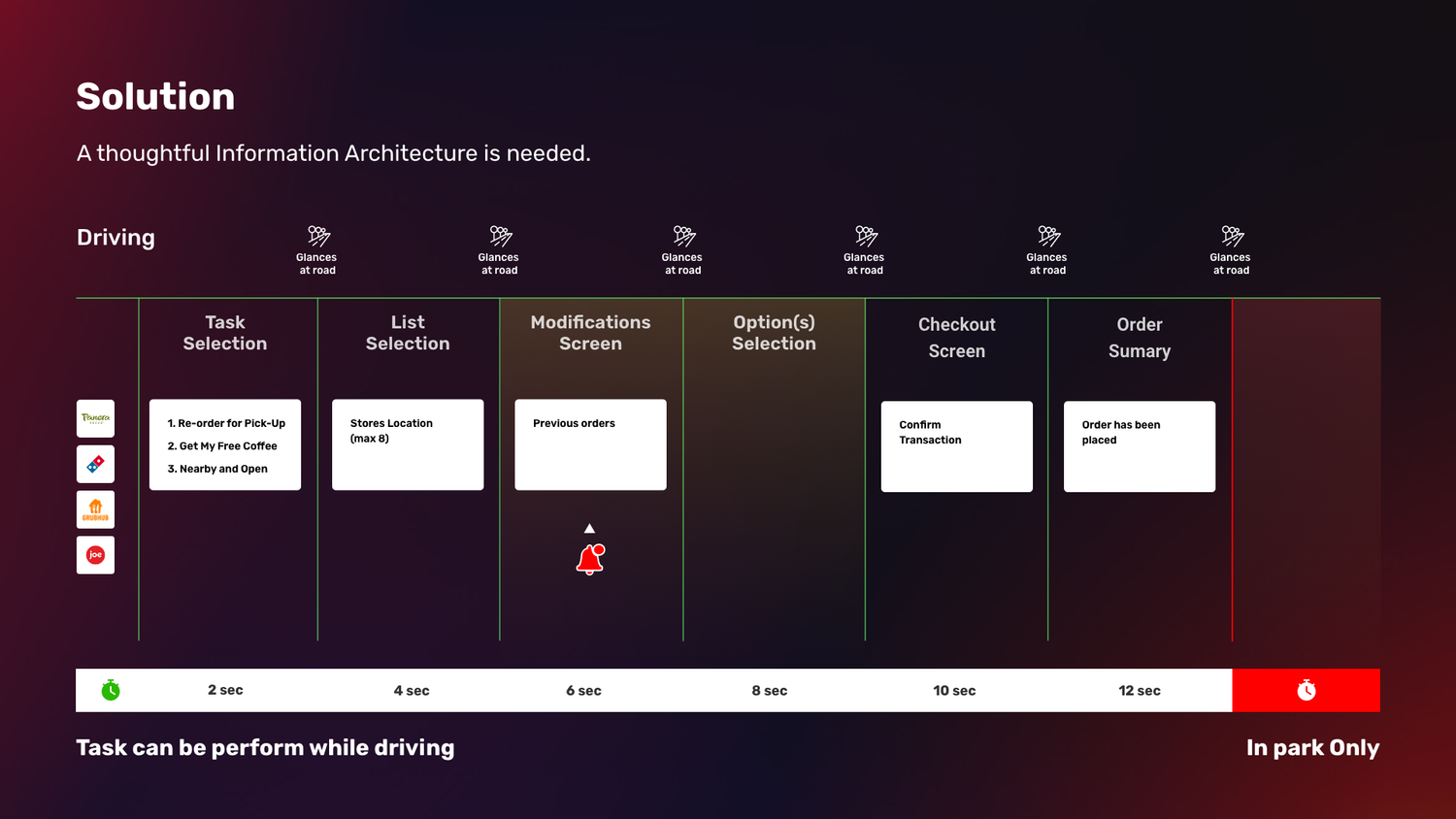
A Framework That Meets NHTSA Guidelines
Ordering from a full menu or customizing items wasn’t viable while the vehicle was in motion, so those features were limited to parked mode. Instead, reordering from history, managing subscriptions, and checking in for curbside pickup provided safe, efficient alternatives that fully complied with NHTSA driver distraction guidelines.
07
Impacts
Process Improvements
The testing I conducted helped the team stay focused on developing features validated through real user feedback.
Business Growth
The framework I developed cut merchant onboarding time from 12 weeks to six. It also serves as an educational tool, helping partners understand platform constraints and streamline API collaboration.
Product Enhancement
With each iteration of Xevo Market, I integrated insights from user and usability testing to refine the experience. I optimized the UI for accessibility, removing unnecessary screens and friction points to reduce driver distraction. Leveraging the engineers’ Relevant Engine, I further enhanced the system to anticipate, auto-suggest, and streamline user actions, moving the product closer to its full potential.
08
My Colleagues
Feedback from colleagues on my work on the Xevo Market platform.

Jared C.
VP of Design, Xevo

Tara H.
Senior Program Manager, Xevo

Yurii S.
Senior QA Lead, Xevo